Introduction
Our recent collaboration with East House, Compeer, and Trillium Health in Rochester represents a leap forward in integrated healthcare services, facilitated by our use of SQL for data-driven decision-making.
This project exemplifies how strategic data analysis can lead to impactful health service improvements and a more seamless patient care experience.
The Challenge
Our goal was to integrate these three entities, co-located at 259 Monroe Avenue, to enhance patient experience through streamlined services and improved operational efficiency. Each organization brought unique strengths but also faced barriers such as inefficient refferal loops and patient overlap, which required innovative strategies to overcome. Crucially, all solutions were designed to comply fully with healthcare regulations to prevent any violations related to the Anti-Kickback Statute, ensuring that our integration efforts remained within legal boundaries.
Strategic Approach
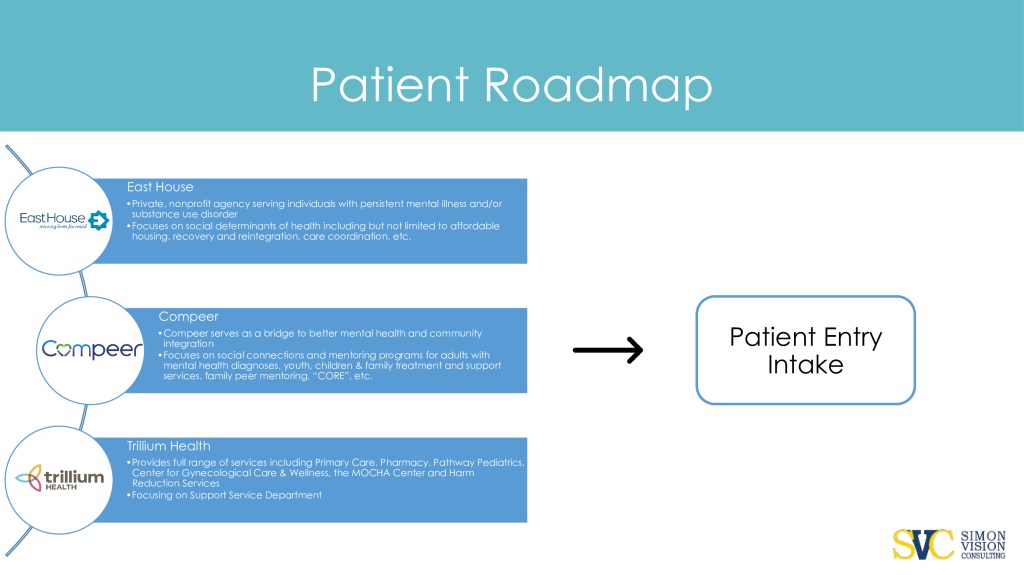
From the outset, we focused on understanding the distinct roles of each organization:
- East House: Specializing in mental health and substance abuse recovery.
- Compeer: Offering mentoring programs and social connections.
- Trillium Health: Providing comprehensive healthcare services.
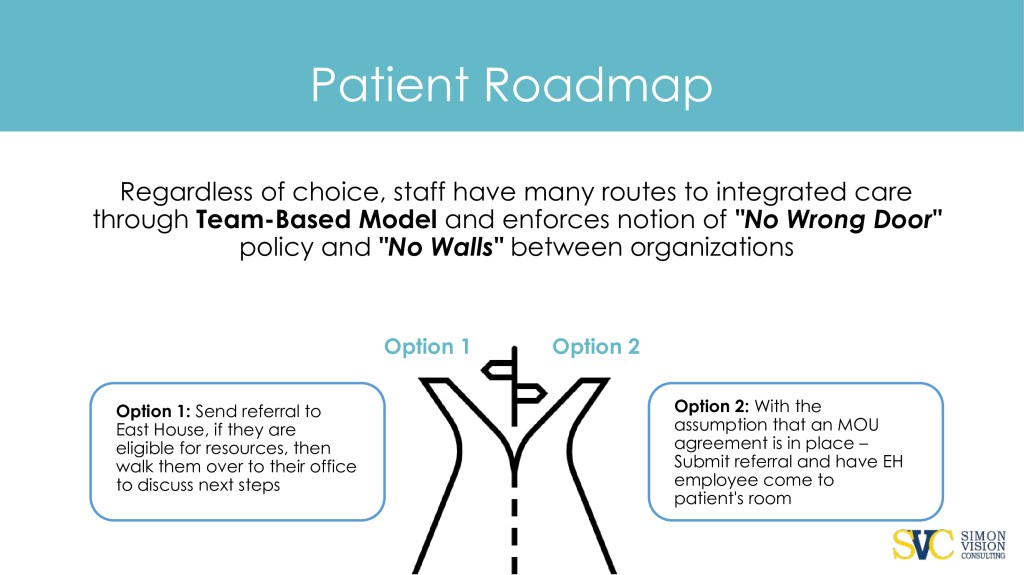
Our strategy centered around the implementation of a “No Wrong Door” policy, ensuring that any entry point leads to comprehensive care tailored to individual needs, seamlessly.
Data-Driven Decision Making
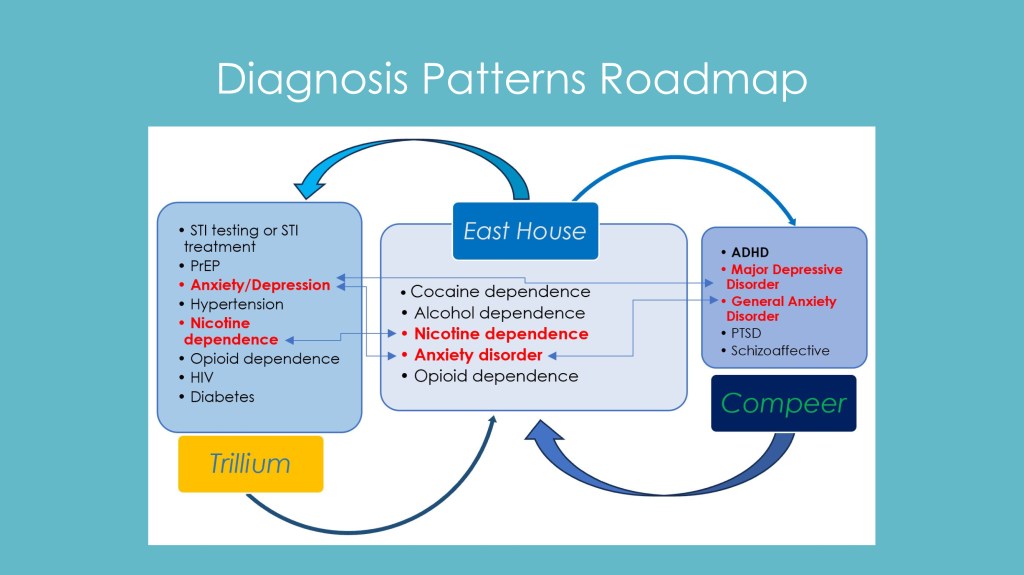
My approach was centered around utilizing PostgreSQL to aggregate and analyze diagnosis data across three entities. This analysis allowed us to identify key diagnoses that intersect across the three organizations, providing a foundational basis for our strategic patient care integration roadmap.
- Aggregating Diagnosis Data: By synthesizing data from the three organizations using advanced SQL queries in PostgreSQL, I was able to pinpoint common diagnoses. This step was crucial for understanding overlapping service needs and optimizing resource allocation.
- Identifying Shared Diagnoses: The analysis revealed top common conditions treated across the organizations, which informed our strategic planning. This allowed for a targeted approach in integrating services, ensuring that patients receive consistent and seamless care as they transition between services.
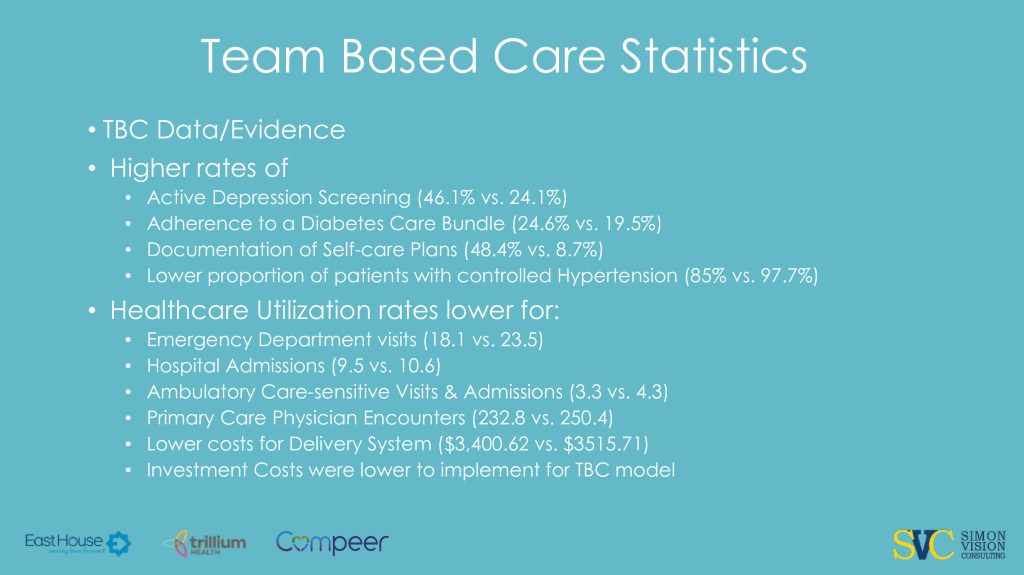
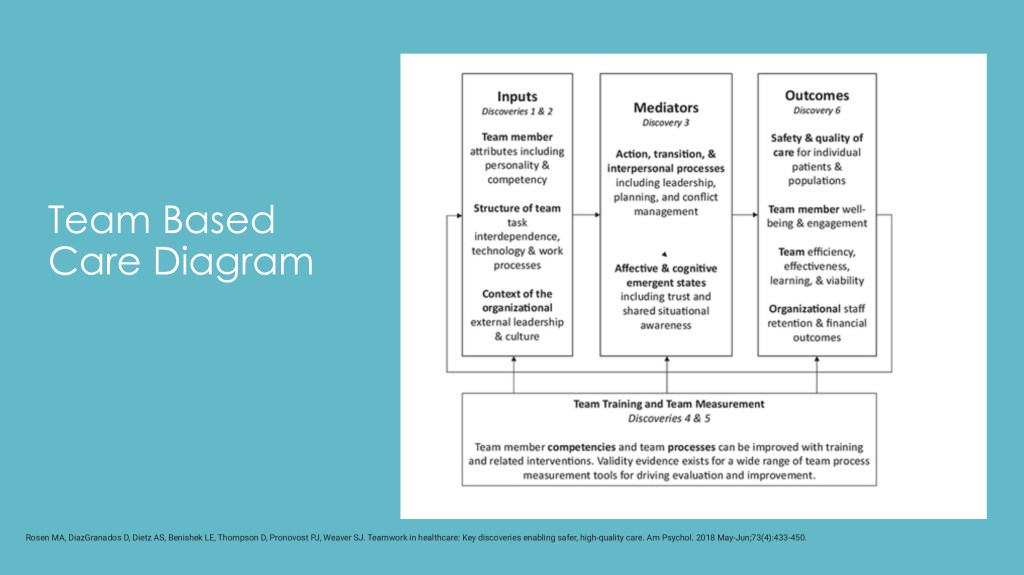
- Developing a Strategic Roadmap: With a clear understanding of shared diagnoses, we designed Rochester’s first Team-Based Care Model.
- Enhancing Service Integration: Leveraging the insights from our analysis, we implemented streamlined care coordination systems. This not only improved the referral process but also enhanced the overall patient care experience, making it easier for patients to access the services they need without unnecessary delays.


Solutions
Our recommendations included:
- Team-Based Care Models: Promoting an integrated care approach to dismantle traditional service barriers.
- Unified Communication Platforms: Utilizing tools like Unite Us to facilitate referrals and patient tracking across organizations.
- Organizational Restructuring: Aligning missions, visions, and operations to foster a cohesive environment.
Results
The implementation of this data-informed patient roadmap led to:
- Enhanced Patient Satisfaction: Streamlined access to services significantly improved patient experiences and satisfaction rates.
- Increased Operational Efficiency: By reducing service overlap and enhancing resource allocation, we achieved better healthcare outcomes at lower costs.
Conclusion
This project is a testament to the power of data in transforming healthcare delivery. By leveraging SQL for in-depth data analysis and decision-making, we have not only improved service delivery but also set a benchmark for future healthcare integration projects. We remain committed to refining our approaches and expanding our impact, driven by data and dedicated to patient care.
 Mengxi Li
Leave a comment